 English
 Español
 عربى
عربى


Understanding the Role of a Mobile Hydro Jetter Rig
Drain and sewer cleaning contractors rely on high pressure water to clear grease buildup, root intrusion, sediment, and scale from pipe runs that a mechanical snake cannot fully restore. A water jetting machine mounted on a vehicle turns that cleaning capability into a rolling asset that can move between job sites without repeated setup and teardown. The mounting choice, whether integrated into a chassis or towed as a separate unit, changes daily productivity, crew size requirements, and long term ownership cost.
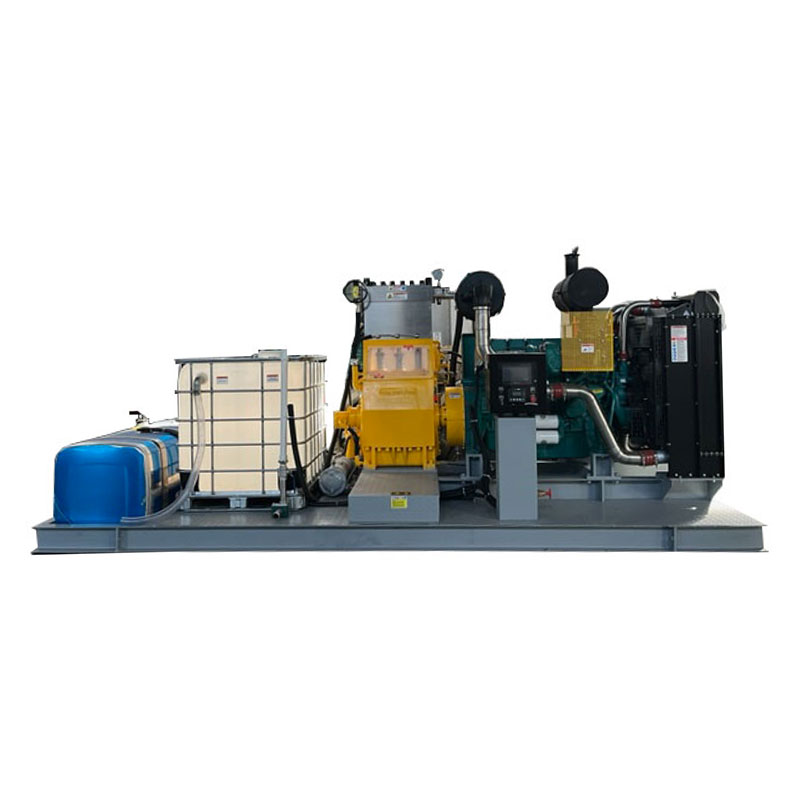
Before comparing configurations, it helps to define what a mobile rig actually needs to deliver in the field: sustained pressure at the nozzle, enough water volume to flush the full pipe length, and a chassis or trailer that can carry the load without exceeding axle ratings.
Truck Mounted vs Trailer Mounted Configurations
Both formats use the same core plumbing: a water tank, a high pressure pump, a hose reel, and an engine or power take off drive. The difference lies in how that equipment is packaged and how it interacts with daily routing.
| Factor | Truck Mounted Unit | Trailer Mounted Unit |
|---|---|---|
| Chassis dependency | Requires dedicated chassis, often a medium duty cab and chassis | Can be towed behind an existing service truck |
| Crew flexibility | One vehicle serves only jetting work | Tow vehicle can be repurposed when trailer is detached |
| Setup time on site | Immediate, no coupling needed | Slightly longer due to hitch and brake connection |
| Typical tank capacity | 500 to 1500 gallons | 300 to 1000 gallons |
| Maneuverability in tight lots | Limited by overall vehicle length | Trailer can be dropped and truck repositioned |
| Upfront capital outlay | Higher, full vehicle plus jetting package | Lower, unit alone without a dedicated tow vehicle |
Contractors running a single, dedicated jetting crew often favor a fully integrated build because it removes the coupling step entirely. Operations that rotate the same vehicle between multiple task types, or that need to leave a jetter parked at a job site while the truck runs other errands, tend to prefer a detachable trailer.
Core Components Found Inside Jetting Trucks and Jetting Vans
Regardless of mounting style, the working components are arranged in a predictable sequence from tank to nozzle. Understanding this layout makes it easier to evaluate a used or new unit during inspection.
The tank supplies water on demand, the pump converts flow into pressure, the reel stores and feeds hose into the line, and the nozzle at the working end shapes the spray pattern for cutting, flushing, or descaling. On a trailer jetter, this entire chain sits on the towed frame, while a truck mounted build integrates the same chain into the vehicle body.
Matching Pressure and Flow Rate to Pipe Diameter
Selecting a unit by pressure alone is a common mistake. Flow rate, measured in gallons per minute, determines how quickly debris is carried out of the pipe once it is cut loose, while pressure determines cutting force at the nozzle tip.
- Residential lateral lines under six inches typically need lower flow but can still require high pressure to cut roots
- Municipal mainlines from eight to eighteen inches need higher flow rate to move volume, often paired with moderate pressure
- Industrial process lines with grease or scale buildup often require both high pressure and high flow together
| Pipe Diameter | Suggested Flow Range (GPM) | Suggested Pressure Range (PSI) |
|---|---|---|
| 2 to 6 inch | 8 to 18 | 2000 to 3000 |
| 6 to 12 inch | 18 to 40 | 2000 to 3500 |
| 12 to 24 inch | 40 to 80 | 2500 to 4000 |
These ranges are general starting points rather than fixed rules, since pipe material, blockage type, and hose length all shift the ideal setting. A crew that regularly services both small lateral lines and larger mainlines benefits from a rig with an adjustable pump rather than a fixed output model.
Water Tank Capacity and Refill Logistics
Tank size sets the working duration between refills, which directly affects how many jobs a crew can complete without returning to a hydrant or refill point. A larger tank adds weight, which then affects chassis rating on a truck mounted build or axle rating on a trailer.
Practical note: a 1000 gallon tank at a typical 20 GPM working flow provides roughly 50 minutes of continuous jetting before refill, though most jobs use intermittent bursts rather than constant flow, extending real world runtime well beyond that figure.
Rigs that serve rural routes with long distances between refill points tend to justify a larger tank even at the cost of added payload, while urban crews near reliable hydrant access can operate efficiently with a smaller reservoir and more frequent refills.
Chassis Weight, Trailer Axle Rating, and Mobility Trade-offs
Every added gallon of water and every pump upgrade adds weight that the mounting platform must carry safely. This is where the mounting decision has the most practical consequence.
Considerations for a Truck Mounted Sewer Jetter
- Chassis gross vehicle weight rating must exceed tank, pump, hose reel, and crew combined
- Center of gravity shifts as the tank empties during a shift, which affects handling on grades
- Body mounting typically requires a commercial upfitter rather than a standard trailer hitch installer
Considerations for a sewer jetter trailer mounted Build
- Tow vehicle rating, hitch class, and brake controller must match the loaded trailer weight
- Trailer axle count and tire rating scale with tank size, similar to a boat or livestock trailer
- Detaching the trailer frees the tow vehicle for other tasks during downtime between jobs
Fleet managers evaluating a jetting van conversion should request axle weight documentation from the builder rather than relying on advertised tank capacity alone, since a tank rated for 750 gallons may still exceed a lighter chassis or trailer frame when fully loaded with hose, pump, and accessories.
Operating Cost, Maintenance, and Trailer Jetter Rental Cost Comparisons
Ownership cost extends beyond the initial purchase. Pump seals, hose wear at the reel guide, and engine or PTO service intervals all factor into total cost of operation.
| Cost Category | Truck Mounted Unit | Trailer Mounted Unit |
|---|---|---|
| Insurance | Commercial vehicle policy required | Trailer endorsement, often lower premium |
| Routine service | Combined vehicle and jetting system service | Jetting system service separate from tow vehicle |
| Resale flexibility | Sold as a complete unit | Trailer and tow vehicle can be sold independently |
| Rental availability | Less common for short term rental | More widely available for short term rental |
Contractors weighing a rental instead of a purchase often find that trailer jetter rental cost runs lower per day than a comparable truck mounted rental, largely because the rental company avoids tying up a full commercial chassis. For occasional or seasonal jetting needs, renting a trailer unit and pairing it with an existing service truck can defer the larger capital decision until utilization data justifies a purchase.
Safety Practices and Operator Training
High pressure water at the nozzle carries enough force to cause serious injury, so operator training is not optional regardless of mounting style.
- Confirm hose reel brake and clutch function before feeding hose into a live line
- Keep hands clear of the nozzle exit point once the pump is engaged
- Use appropriate eye and hand protection when handling recovered debris
- Verify trailer brake controller settings before towing a loaded trailer jetter on public roads
- Inspect hose for abrasion or kinking after each job, since a failure under pressure can whip unpredictably
Routine pre-trip inspection should include a check of tank fill level indicators, pump pressure gauge accuracy, and hose reel swivel condition, since a worn swivel is one of the more common points of unexpected pressure loss in the field.
Frequently Asked Questions
Q1: Is a truck mounted sewer jetter always more expensive than a trailer mounted one?
Not always, but a truck mounted build usually carries a higher total cost once the chassis is included, since the trailer option can be paired with a service vehicle the contractor already owns.
Q2: How much water tank capacity does a small plumbing crew actually need?
Crews focused mainly on residential lateral lines under six inches in diameter can often work efficiently with tanks in the 300 to 500 gallon range, refilling between jobs rather than carrying maximum capacity at all times.
Q3: Can a trailer mounted jetter be used for mainline work as well as lateral lines?
Yes, provided the pump on the trailer delivers sufficient flow rate and pressure for the larger pipe diameter, since mainline work depends more on the pump specification than on the mounting style itself.
Q4: What determines whether a tow vehicle can safely pull a loaded jetter trailer?
The tow vehicle's rated towing capacity, hitch class, and brake controller compatibility must all match or exceed the fully loaded trailer weight, including tank, pump, hose, and water.
Q5: How often should the pump and hose on a jetting van be serviced?
Service intervals vary by usage hours, but a general practice is to inspect seals and hose condition after every major job and schedule full pump service according to the manufacturer's recommended operating hour interval.