 English
 Español
 عربى
عربى


Understanding Ultra High Pressure Water Jetting Technology
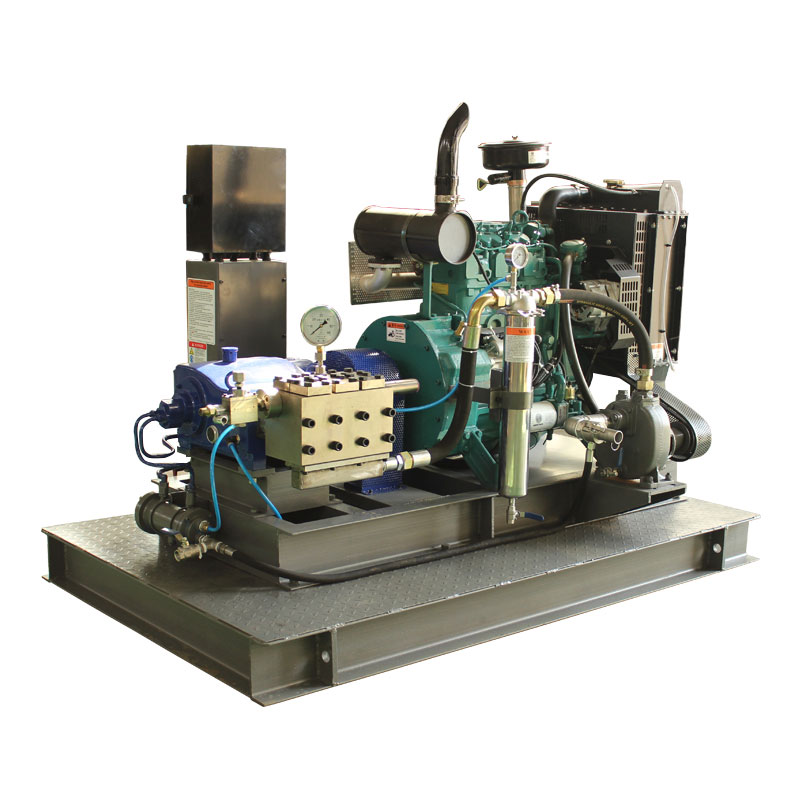
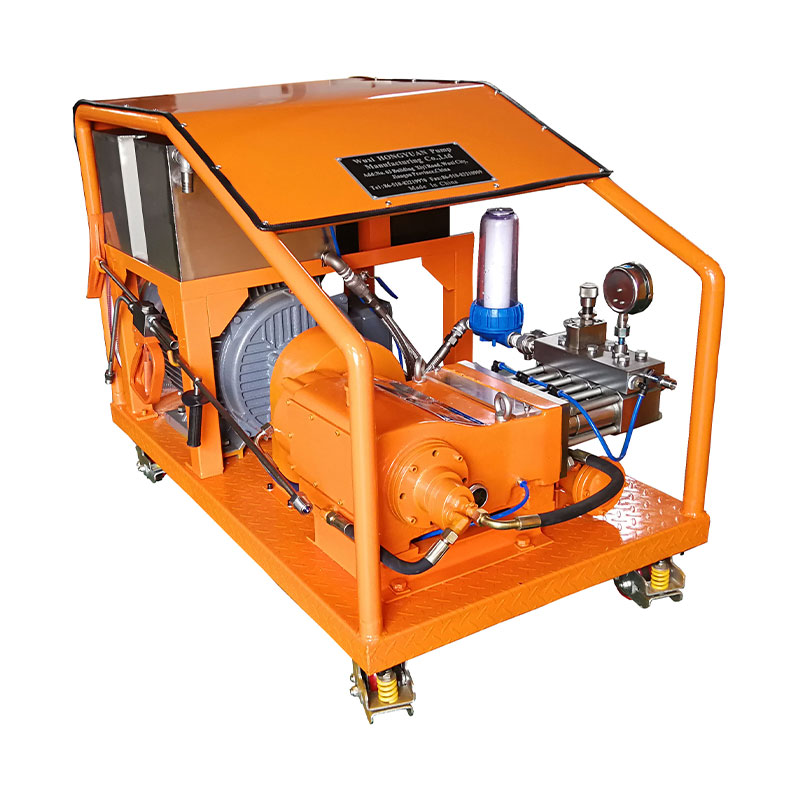
Ultra high pressure water jetting relies on a straightforward physical principle: water is pressurized by a triplex or intensifier pump, then forced through a small-diameter orifice at extremely high velocity. The resulting jet carries enough kinetic energy to strip coatings, remove scale, cut soft materials, and prepare surfaces without relying on abrasive media or chemical solvents. A properly specified water blasting machine converts hydraulic horsepower into a concentrated, controllable force that can be tuned for tasks ranging from gentle rinsing to aggressive concrete removal.
Industrial jetting systems are generally grouped into three broad pressure bands. Low and medium pressure units operate below 10,000 psi and are suited to general washdown work. High pressure water jetting equipment typically spans 10,000 to 20,000 psi, covering most surface preparation and descaling tasks. Ultra high pressure, or UHP, equipment pushes beyond 20,000 psi, reaching 36,000 to 40,000 psi in specialized configurations for hydro-demolition and heavy scale removal.
What separates industrial-grade equipment from lighter consumer units is not just peak pressure, but the consistency of that pressure under continuous duty, the durability of seals and valves exposed to cyclic loading, and the availability of interchangeable nozzles and lances for different tasks. Flow rate, measured in gallons per minute, works alongside pressure to determine cleaning power; a machine with high pressure but low flow removes material slowly, while balanced flow and pressure clear large areas efficiently.
Most industrial pumps used in this range are positive-displacement triplex plunger units, chosen because they deliver a steady, repeatable pressure curve rather than the pulsing output typical of simpler pump designs. Ceramic-coated plungers and hardened valve seats resist erosion from the constant high-velocity flow of water passing through the pump head, which is one reason well-built pumps can log thousands of hours between major rebuilds when supply water is properly filtered and lubrication schedules are respected. Engine or motor sizing also matters: undersized power sources force the pump to work below its rated pressure curve, while oversized drivetrains add unnecessary weight and fuel consumption without improving cleaning performance.
Operators new to industrial jetting sometimes assume that raising pressure is always the answer to a slow job. In practice, standoff distance and nozzle angle often have a larger effect on cleaning speed than an incremental pressure increase, and pushing pressure beyond what a task requires accelerates component wear without a proportional gain in output.
Core Components of a Water Blasting Machine
Every UHP water blasting machine, regardless of manufacturer, shares a common set of subsystems. Understanding what each part does helps operators diagnose problems quickly and helps buyers compare specifications meaningfully.
| Component | Function | Typical Specification |
|---|---|---|
| High-pressure pump or intensifier | Generates the working pressure | 10,000 to 40,000 psi range |
| Hose and hose reel | Delivers pressurized water to the nozzle | Rated well above operating pressure |
| Nozzle or lance | Shapes and directs the jet | Fixed, rotating, or fan pattern |
| Unloader or relief valve | Protects the system from pressure spikes | Set slightly above max working pressure |
| Filtration system | Removes particulates from supply water | Multi-stage, typically 5 to 50 micron |
| Control console | Regulates pressure, flow, and shutdown | Manual dial or digital interface |
Filtration deserves particular attention. Because UHP orifices are extremely small, even minor sediment in the supply water accelerates nozzle wear and can score the pump's internal components. Operators running an industrial jetting equipment fleet on untreated water sources typically report shorter seal life and more frequent orifice replacement than those using properly filtered supply lines.
Hose reels also influence day-to-day productivity more than their simple function suggests. A powered reel with a hydraulic or electric drive reduces manual handling fatigue on long runs, while hose management systems that keep the line off abrasive ground surfaces extend hose life considerably. On mobile applications, hose diameter is chosen as a balance between pressure drop over distance and the weight an operator must maneuver by hand; oversized hose reduces flexibility, while undersized hose increases friction loss and can starve the nozzle of the flow it needs to perform.
Control consoles on modern equipment increasingly include digital pressure and flow readouts, programmable ramp-up sequences that protect seals during startup, and automatic shutdown triggers tied to abnormal pressure spikes. These features reduce the chance of operator error translating into equipment damage, particularly on job sites where multiple crews rotate through the same machine across a shift.
Pressure Classes and Matching Applications
Selecting the correct pressure class avoids both under-performance and unnecessary wear. The table below outlines general bands used across industrial surface preparation and cleaning work.
| Pressure Class | Typical Range | Common Application |
|---|---|---|
| Standard pressure washing | 3,000 to 10,000 psi | Light degreasing, general washdown |
| High pressure jetting | 10,000 to 20,000 psi | Coating removal, moderate scale, surface roughening |
| Ultra high pressure (UHP) | 20,000 to 40,000 psi | Hydro-demolition, hard scale, rubber and coating stripping |
Why the 20000 psi Threshold Matters
A 20000 psi water jet is often treated as the practical dividing line between general industrial cleaning and true ultra high pressure work. Below this threshold, most coatings and light rust can be removed, but hardened scale, thick rubber linings, and deteriorated concrete typically resist the jet. Above it, the cutting action becomes strong enough to selectively remove weakened material while leaving sound substrate intact, which is why hydro-demolition equipment is almost always specified in the 20,000 psi and higher range.
Industrial Surface Preparation Applications
UHP water jetting has displaced many abrasive and chemical methods in sectors where surface integrity, worker exposure, and disposal costs are closely regulated.
Steel Structure and Pipeline Descaling
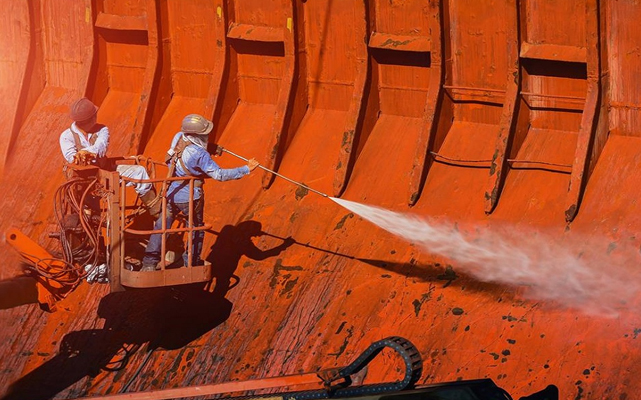
Bridges, storage tanks, and pipeline sections accumulate mill scale and corrosion products that must be removed before recoating. Water jetting reaches a near-white metal finish without embedding abrasive residue into the substrate, which improves coating adhesion and extends recoat intervals.
Tank and Vessel Interior Cleaning
Rotating lances mounted on remote-controlled skids allow operators to clean tank interiors from outside confined spaces, reducing entry requirements. This approach is common for removing sludge, scale, and residual product buildup in storage and process vessels.
Coating and Rubber Lining Removal
Aged rubber linings and multi-layer coatings can be selectively stripped using high pressure water jetting equipment tuned to remove the degraded layer while leaving the substrate ready for immediate recoating, avoiding the profile damage that aggressive abrasive blasting can cause.
- Reduced secondary waste compared with abrasive media
- No embedded grit to trap moisture under new coatings
- Selective removal of weakened or corroded material only
- Lower airborne dust exposure for nearby personnel
Hydro-Demolition and Concrete Applications
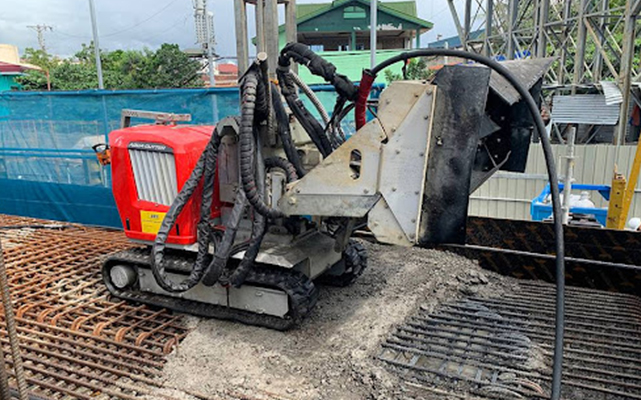
In concrete rehabilitation work, UHP water blasting machine systems are used to remove deteriorated or chloride-contaminated concrete without damaging the reinforcing steel beneath. Conventional mechanical breaking often causes microfractures in the remaining sound concrete, weakening the bond for new pour. Hydro-demolition instead erodes weak material selectively, since sound concrete resists the jet far better than cracked or carbonated concrete.
Typical Hydro-Demolition Workflow
Bridge deck and parking structure rehabilitation projects commonly follow a repeatable sequence when specifying hydro-demolition equipment for concrete removal.
Typical Hydro-Demolition and Maintenance Workflow
While the sequence above describes concrete removal, the same staged discipline applies broadly across industrial jetting work: survey the target area, configure equipment for the correct pressure class, perform the jetting pass with controlled traverse speed, and inspect results before moving to the next section.
Selecting the Right Equipment: Key Specifications
Matching equipment to the task avoids both wasted capital and undersized performance. The comparison below groups common configurations by duty class.
| Duty Class | Pressure | Flow Rate | Typical Power Source |
|---|---|---|---|
| Light industrial | Up to 10,000 psi | 4 to 8 gpm | Electric motor |
| Medium industrial | 10,000 to 20,000 psi | 8 to 15 gpm | Diesel engine |
| UHP heavy duty | 20,000 to 40,000 psi | 10 to 40 gpm | Diesel or dedicated power pack |
Portability
Skid-mounted, trailer-mounted, or truck-mounted configurations affect mobilization time between job sites.
Duty Cycle
Continuous-duty pumps tolerate extended shifts better than intermittent-rated units.
Automation
Remote-controlled lances and robotic crawlers reduce manual exposure on repetitive tasks.
Safety Considerations and PPE Requirements
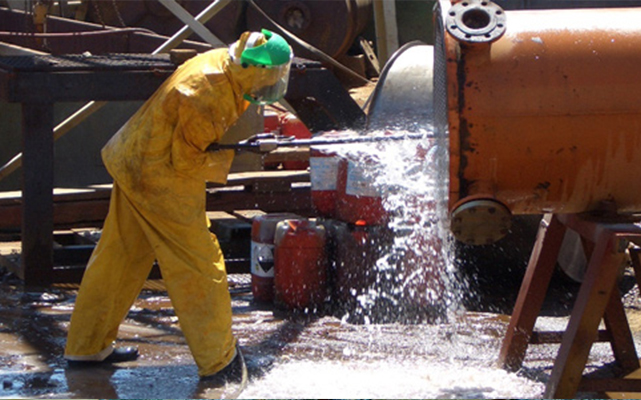
Water at ultra high pressure behaves less like a liquid and more like a cutting tool. Standard workwear offers no meaningful protection against a direct jet strike, so dedicated water blasting ppe is a baseline requirement rather than an optional precaution.
- Cut and puncture resistant jetting suit rated for the equipment's working pressure
- Full face shield or visor rated for high pressure spray
- Reinforced safety boots with slip resistance on wet surfaces
- Hearing protection where pump and jet noise exceed exposure limits
- Documented standoff distance and dead-man trigger training before operation
Formal training programs typically cover recognizing jet reaction force, maintaining safe standoff distances that vary by pressure class, and understanding how worn nozzles can create unpredictable spray patterns. Many operations also require a documented lockout procedure before any hose or fitting is disconnected, since residual pressure trapped in a line after shutdown can still cause injury if released without warning. Two-person crews are common on higher pressure work, with one operator controlling the lance and a second monitoring the surrounding area and emergency shutoff.
Total Cost of Ownership and ROI Considerations
Purchase price is only one part of the equation when evaluating industrial jetting equipment. Fuel or electricity consumption, consumable parts such as nozzles and seals, and labor efficiency over the life of the machine typically outweigh the initial capital cost across a multi-year ownership period.
Consumable Costs
Orifices, seals, and packing wear at predictable rates tied to running hours and water quality. Budgeting for scheduled replacement rather than reacting to failures avoids unplanned downtime and the higher labor cost of emergency repairs.
Labor Efficiency
Equipment that matches flow and pressure to the task reduces the number of passes needed to reach a target surface condition. A unit that clears a given area in fewer passes lowers the labor hours billed per project, which often has a larger effect on overall project cost than the hourly rental or ownership rate of the machine itself.
- Track running hours against a maintenance calendar rather than calendar dates alone
- Compare consumable part costs across duty classes before committing to a pressure rating higher than the work requires
- Factor mobilization time and crew size into cost per completed area, not just machine rental rate
Environmental and Regulatory Considerations
Because UHP water jetting avoids abrasive media and most chemical strippers, it is frequently the preferred method where wastewater discharge and hazardous waste disposal are tightly regulated. That said, the runoff generated during jetting still carries removed coating material, rust, or concrete fines, and most jurisdictions require containment and proper disposal or treatment of that wastewater rather than allowing it to enter storm drains untreated.
Vacuum recovery systems paired with a water blasting machine capture spent water and debris at the point of removal, which simplifies compliance on projects near waterways or in urban settings where uncontrolled runoff is not permitted. Project specifications increasingly call for documented containment plans alongside the jetting method itself, particularly on bridge, marine, and municipal infrastructure work.
Maintenance Best Practices for Long Service Life
UHP components operate under repeated high-stress cycling, so preventive maintenance has a direct effect on both safety and total cost of ownership.
Daily Checks
Inspect hoses for abrasion, verify fittings are torqued correctly, and check filtration elements before startup.
Scheduled Service
Seals, valves, and orifices wear predictably with hours of use. Tracking runtime against a service calendar catches wear before it causes unplanned downtime.
| Task | Frequency | Purpose |
|---|---|---|
| Filter element inspection | Daily | Prevent particulate damage to orifices |
| Hose and fitting inspection | Daily | Catch abrasion before failure |
| Seal and packing replacement | Per manufacturer hour interval | Maintain pressure and prevent leaks |
| Pressure calibration check | Monthly or per project | Confirm output matches control readout |
Comparing UHP Water Jetting with Alternative Surface Preparation Methods
No single method suits every project. The comparison below highlights where ultra high pressure water jetting tends to outperform, and where alternatives may still be preferred.
| Method | Waste Generated | Substrate Impact | Typical Use Case |
|---|---|---|---|
| Abrasive blasting | Spent media requires disposal | Can embed grit, alters profile | Heavy corrosion, uniform profile needs |
| Chemical stripping | Hazardous liquid waste | Chemical residue risk | Sensitive substrates, thin coatings |
| UHP water jetting | Water and removed material only | Selective, minimal substrate damage | Coating removal, hydro-demolition, descaling |
Because water jetting leaves no chemical residue and generates comparatively little secondary waste, many facilities favor it where disposal regulations or coating adhesion requirements are strict. Cycle time is the main tradeoff: on heavily oxidized or very thick coatings, abrasive blasting can sometimes clear an area faster, which is why some specifications call for a combined approach, using abrasive methods on the heaviest buildup and water jetting for final cleanup and edge blending where substrate protection matters most.
Decisions between methods should also account for the surrounding environment. Confined spaces, occupied facilities, and sites near sensitive waterways tend to favor water jetting because it limits airborne particulate and avoids the disposal complexity of spent abrasive media or chemical residue. Open-air structural work with heavy, uniform corrosion may still favor abrasive blasting where achieving a specific surface profile across a large area quickly is the priority.
Frequently Asked Questions
Q1: What pressure is considered ultra high pressure water jetting?
Most industry references place the UHP threshold at 20,000 psi and above, extending up to roughly 40,000 psi for specialized hydro-demolition and heavy scale removal work.
Q2: Can a single water blasting machine handle both surface prep and hydro-demolition?
Some heavy-duty units cover both ranges when fitted with interchangeable pump modules and nozzles, but dedicated equipment matched to a narrower pressure band typically performs more consistently and wears more predictably.
Q3: How does water jetting compare to abrasive blasting for coating removal?
Water jetting avoids embedding abrasive media into the substrate and produces less airborne dust, though it generally requires a longer cycle time on very thick or heavily oxidized coatings compared with aggressive abrasive methods.
Q4: What PPE is mandatory when operating UHP equipment?
A pressure-rated jetting suit, face shield, reinforced boots, and hearing protection are standard, along with documented operator training on standoff distance and emergency shutdown procedures.
Q5: How often should nozzles and orifices be replaced?
Replacement intervals depend on water quality and running hours, but any noticeable drop in pressure or an irregular spray pattern usually signals orifice wear that warrants inspection.
Q6: Is hydro-demolition safe for structures with embedded rebar?
Yes, when properly calibrated. UHP jetting is selective enough to erode weakened or carbonated concrete while leaving sound concrete and intact rebar largely undisturbed, which is a primary reason it is specified for reinforced structure rehabilitation.
Q7: What water quality is needed to supply a UHP pump?
Supply water should be filtered to remove sediment and grit before it reaches the pump, and most manufacturers specify a maximum particulate size to protect plungers, seals, and orifices. Poor water quality is one of the most common causes of premature pump wear on job sites.