 English
 Español
 عربى
عربى


Why Hose Size Is the Hidden Variable in Pressure Washer Output
Most buyers focus on pump horsepower, PSI ratings, or nozzle style when they shop for cleaning equipment, yet the hose connecting the pump to the wand is often the single component that quietly limits real-world performance. A hose that is too narrow chokes flow before it ever reaches the nozzle, while an oversized hose adds unnecessary weight and stiffness without improving output. Getting hose diameter right is a calculation problem, not a guess, and it depends on flow rate, hose length, and the working pressure the pump is rated to deliver.
This guide breaks down how inner diameter, GPM, and hose length interact, compares the two most common high pressure hose sizes on the market, and explains what the inlet side of the system needs so the pump never runs starved of water.
Understanding How Hose Inner Diameter Controls Flow
Every hose has two dimensions that matter: outer diameter, which affects durability and burst rating, and inner diameter, which determines how much water can move through it per minute. A narrower bore forces the same volume of water to travel faster to keep up with pump output, and that added velocity creates friction loss along the hose wall. The longer the hose, the more that friction loss compounds, which is why a 100 foot run behaves very differently from a 25 foot run even with identical diameter.
Quick Reference
As a general rule, flow capacity increases roughly with the square of the inner diameter, so a modest increase in bore size produces a disproportionately larger gain in usable flow at the nozzle.
Friction loss shows up as a drop in working pressure at the gun, even though the pump itself is producing full output at the outlet port. Operators sometimes mistake this for a failing pump when the real culprit is an undersized or excessively long hose run.
Temperature also plays a role that is easy to overlook. Hot water systems, common in commercial degreasing applications, cause hose material to soften slightly, which can allow minor diameter changes under pressure that widen the effective friction loss compared to a cold water setup using the same nominal hose size. Buyers running heated units should treat published diameter figures as a starting reference rather than an exact guarantee, and should favor the larger end of any recommended range when hot water is involved.
Another factor that compounds the diameter effect is the number and tightness of bends in the routing. A hose run with several sharp turns around corners, wheels, or storage reels behaves like a longer straight run in terms of friction loss, because each bend adds resistance beyond what the raw length figure suggests. Where possible, minimizing sharp bends and keeping the hose path as direct as practical preserves more of the pump's rated pressure by the time water reaches the nozzle.
What Size Pressure Washer Hose Do You Actually Need
Hose sizing decisions should start with the flow rate of the machine, expressed in gallons per minute, rather than with pressure alone. Two machines rated at the same PSI can require very different hose diameters if one moves significantly more water than the other.
| Pump Flow Rate | Recommended Hose ID | Typical Application |
|---|---|---|
| Up to 2.5 GPM | 1/4 inch | Light residential cleaning, short runs under 50 feet |
| 2.5 to 4.5 GPM | 3/8 inch | Mid-duty commercial cleaning, standard hose reels |
| 4.5 to 8 GPM | 1/2 inch | Heavy commercial and light industrial units |
| Above 8 GPM | 5/8 inch or larger | Industrial cleaning systems and fixed installations |
These ranges are starting points rather than fixed rules. A unit sitting near the top of a flow bracket, or one running an extended hose length, often performs better moved up to the next bore size to preserve pressure at the gun.
It also helps to separate the question of what a hose can survive from the question of what a hose should carry for efficient operation. Many hoses are physically rated to handle pressures and flows well beyond what their diameter is optimized for, meaning the hose will not burst or fail even when undersized for the application, but the operator still loses usable pressure at the nozzle. Sizing decisions should be based on efficient flow delivery, not just on whether the hose can technically withstand the pump's maximum rating without rupturing.
Buyers working with variable output equipment, such as adjustable pressure units or machines that can be fitted with interchangeable pump heads, should size hose for the highest flow configuration the machine will realistically run, not the default setting out of the box. Downsizing a hose later because a lower flow nozzle is normally used is rarely worth the tradeoff, since most operators eventually switch nozzles or pump heads for specific jobs and do not want to also swap hose at the same time.
1/4 Inch vs 3/8 Inch Pressure Washer Hose
Where the Difference Actually Shows Up
The choice between a 1/4 inch and 3/8 inch high pressure hose is the most common sizing question for mid-range electric and gas units. Both sizes are widely available, both can be rated for the same maximum PSI, and both use the same connection fittings in many product lines, so the deciding factor is almost always flow rate and hose length rather than pressure rating.
- 1/4 inch hose is lighter, coils tighter, and is easier to maneuver around obstacles, making it a common choice for compact residential units under roughly 2.5 GPM.
- 3/8 inch hose carries noticeably more volume with less friction loss, which matters once flow climbs past 3 GPM or hose length exceeds 75 feet.
- Running a high flow pump through a 1/4 inch hose can create a pressure drop large enough to be felt at the trigger gun, even though the pump gauge upstream reads full pressure.
- Running a low flow pump through 3/8 inch hose is not harmful, but it adds unneeded weight and cost without a performance benefit.
Matching hose bore to actual flow rate, not just to pressure rating, is the single most overlooked step in pressure washer setup.
Wall thickness and reinforcement layers also differ between the two sizes in ways that affect handling as much as raw diameter. A 3/8 inch hose typically carries a thicker braided or spiral reinforcement layer to maintain its burst rating at the larger bore, which adds stiffness and makes tight coiling slightly more difficult in confined storage compartments. Operators who move equipment frequently between job sites, or who store hose on compact reels, sometimes accept a small performance tradeoff in exchange for the easier handling that 1/4 inch hose provides, particularly when their typical flow rate sits comfortably within the lower bracket.
Pressure Washer Inlet Hose Requirements
The Supply Side Matters Just As Much
The discharge hose gets most of the attention, but the inlet hose feeding water into the pump has its own sizing requirements. Most manufacturers specify a minimum inlet hose size, commonly a garden hose style fitting, because an undersized supply line can starve the pump of water even when the discharge side is correctly matched.
| Inlet Hose ID | Approximate Supply Capacity | Suitability |
|---|---|---|
| 1/2 inch garden hose | Lower flow capacity | Adequate only for small residential pumps |
| 5/8 inch garden hose | Moderate flow capacity | Standard for most consumer and light commercial units |
| 3/4 inch garden hose | Higher flow capacity | Recommended for commercial pumps above 4 GPM |
Choosing between a 5/8 inch or 3/4 inch water hose for the inlet side depends on the pump draw rate and the distance from the water source. A pump pulling more water than the inlet hose can physically supply will cavitate, run erratically, and wear internal components faster than normal, so undersizing the inlet is just as damaging as undersizing the discharge hose.
Inlet hose length matters just as much as diameter, and it is frequently ignored because garden hose style supply lines are treated as an afterthought compared to the purpose built discharge hose. A long, thin supply line run from a distant spigot can bottleneck a commercial pump just as effectively as an undersized discharge hose, particularly on hot days when municipal water pressure tends to dip during peak demand hours. Where the water source is more than a short distance from the equipment, upsizing the inlet hose by one increment, or shortening the run wherever possible, helps keep the pump fed at its rated draw.
Screens and filters at the inlet fitting add a small amount of restriction as well, and a partially clogged inlet screen can produce symptoms nearly identical to an undersized inlet hose. Periodic inspection of the inlet screen, alongside confirming the hose itself is not kinked or crushed under equipment weight, is a low cost maintenance step that prevents flow related performance complaints that are otherwise easy to misattribute to the pump or the discharge hose.
Air Hose Sizing Compared: 3/8 Air Hose vs 1/4
Some pressure washing setups pair a pump with pneumatic tools or air-assisted accessories, which brings a separate sizing question into the picture: 3/8 inch air hose versus 1/4 inch air hose. The logic mirrors water hose sizing in principle, though the numbers involved are different because air is compressible and water is not.
- 1/4 inch air hose is common for low draw tools and short connections, typically under 4 CFM at moderate line pressure.
- 3/8 inch air hose supports higher volume tools and longer runs with less pressure drop, generally recommended once draw exceeds roughly 4 to 6 CFM.
- As with water hose, length compounds the effect of undersizing, so a long 1/4 inch air line can bottleneck a tool that would run fine on a short section of the same hose.
For most standalone pressure washing work this distinction is secondary, but for shops running combined air and water systems off a shared compressor and pump setup, sizing both lines correctly prevents one system from robbing performance from the other.
Fitting compatibility between air and water lines is worth double checking before assuming either hose type can be substituted for the other. Air hose fittings are generally not rated for the sustained high pressure water service that discharge hoses see, and the two hose constructions use different reinforcement approaches suited to their respective media. Treating the two categories as interchangeable, even when a fitting happens to physically thread together, risks a failure under conditions the hose was never designed to handle.
Sizing Hose for High Pressure Pump Systems and Longer Runs
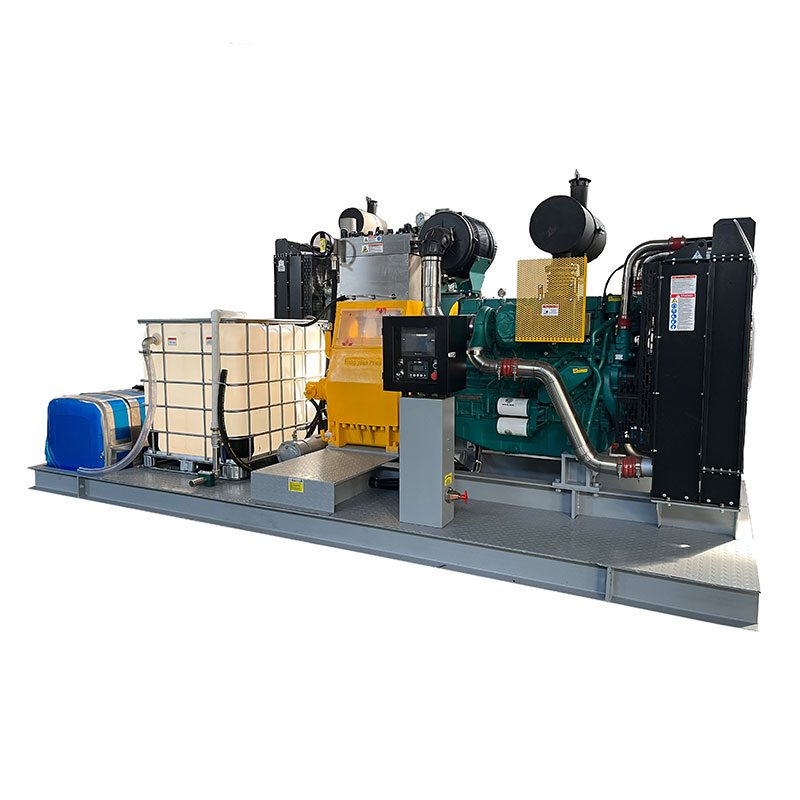
A high pressure pump rated for continuous commercial duty typically moves enough volume that hose sizing decisions carry more weight than they do on light residential equipment. Fixed installations, wash bays, and mobile units running long reel lengths all benefit from calculating expected friction loss before the hose is purchased, rather than after performance complaints start.
Length Adjustment Guide
| Hose Length | Adjustment |
|---|---|
| Under 50 feet | Use standard sizing chart value |
| 50 to 100 feet | Move up one bore size if flow exceeds 3 GPM |
| Over 100 feet | Move up one bore size regardless of flow rate |
Shops that run multiple bays off a single pressure washer pump system should also account for simultaneous demand, since two operators drawing from the same pump at once effectively doubles the flow the hose network needs to carry without a pressure drop at either station.
Reading a Flow and Pressure Loss Diagram
The relationship between hose diameter, length, and pressure drop is easier to interpret visually than numerically. The diagram below illustrates the general pattern: pressure at the gun falls as hose length increases, and the rate of that fall is steeper for narrower hose.
The gap between the two lines widens as length increases, which visually confirms why narrow hose becomes a liability on longer reels even when it performs acceptably on short connections.
Common Installation Mistakes That Reduce Performance
Avoidable Errors Worth Checking First
- Coiling excess hose tightly near the pump outlet, which adds unnecessary bends and localized friction loss right at the point where flow is already at its highest pressure.
- Mixing hose diameters mid-run using reducing fittings, which creates a bottleneck at the transition point regardless of how generous the larger section's capacity might be elsewhere in the run.
- Ignoring inlet hose condition, since a kinked or partially blocked supply line can mimic the symptoms of an undersized discharge hose and send troubleshooting in the wrong direction.
- Selecting hose based on PSI rating alone without checking that the inner diameter matches the pump's actual GPM output, which leaves pressure capacity unused at the nozzle.
- Extending hose length without re-checking whether the original diameter still supports that run without excessive pressure loss, especially after adding a second or third reel section.
- Storing hose coiled at a radius tighter than its rated minimum bend, which accelerates wear at the coil points and can eventually create permanent restrictions in the line.
Hose Construction and Material Considerations
Layers That Affect Real World Performance
Diameter is the primary factor in flow capacity, but the construction of the hose wall influences how consistently that diameter holds up under repeated use. Most high pressure hose is built from an inner tube, one or more reinforcement layers, and an outer cover, and the quality of each layer affects both longevity and how much the effective bore narrows under pressure cycling over time.
| Layer | Function | Performance Impact |
|---|---|---|
| Inner tube | Contains the water and resists chemical exposure | Poor quality tubing can swell slightly under pressure, narrowing effective flow |
| Reinforcement | Braided or spiral fiber layer resisting burst pressure | Determines maximum safe working pressure at a given diameter |
| Outer cover | Protects against abrasion, UV exposure, and crushing | Extends usable service life, indirectly protecting flow consistency |
Kink resistance is another practical factor tied to construction rather than diameter alone. A hose that kinks easily can create a temporary but severe restriction that behaves like a much smaller diameter hose at that point in the run, and repeated kinking eventually causes visible wear or weak spots at the same location. Hose routed around sharp equipment edges or repeatedly coiled at a tight radius benefits from a construction rated for a smaller minimum bend radius, even if the nominal inner diameter matches a straight run alternative.
Cold weather storage and use introduce a further consideration, since some hose materials stiffen significantly at low temperatures, which increases the effective force needed to maneuver the hose and can make tight coiling impractical without warming the hose first. Operators working in seasonal climates should factor expected storage and operating temperature range into material selection alongside the diameter and length calculations already covered.
Frequently Asked Questions
Q1: What size pressure washer hose is standard for most residential machines?
Most residential machines under roughly 2.5 GPM pair well with 1/4 inch inner diameter hose at lengths under 50 feet, which balances flexibility with acceptable pressure loss.
Q2: Should I choose 1/4 inch or 3/8 inch hose if my pump is rated near 3 GPM?
At that flow rate, 3/8 inch hose is generally the safer choice, particularly if the hose run exceeds 50 feet or the setup includes multiple bends and fittings.
Q3: Does a 5/8 inch or 3/4 inch water hose matter more for the inlet side?
Yes, the inlet hose has its own sizing requirement separate from the discharge hose, and undersizing it can starve the pump regardless of how well the discharge hose is matched.
Q4: How does hose length change the ideal diameter?
Longer runs increase friction loss for a given diameter, so hoses over 100 feet typically need one size larger bore than the same flow rate would require on a short run.
Q5: Can using an oversized hose ever cause problems?
Oversized hose rarely causes performance problems, but it adds weight, stiffness, and cost without improving flow beyond what the pump can actually produce.
Q6: Is 3/8 inch air hose ever needed for pressure washing equipment?
Only when the setup includes pneumatic accessories or tools with meaningful air draw, since standard pressure washer pumps do not use compressed air in their operation.