 English
 Español
 عربى
عربى


When a main sewer line backs up, most homeowners face a choice between two methods: snaking or hydro jetting. While snaking has been the default for decades, main sewer line hydro jetting has grown into a widely adopted professional technique — and for good reason. It does not merely punch a hole through a clog; it scours the pipe walls clean. But like any powerful process, it comes with real trade-offs that deserve honest examination before you commit to a service call.
This guide breaks down exactly what hydro jetting a sewer line involves, where it excels, where it falls short, and how to decide whether it is the right approach for your situation.
What Is Hydro Jetting a Sewer Line?
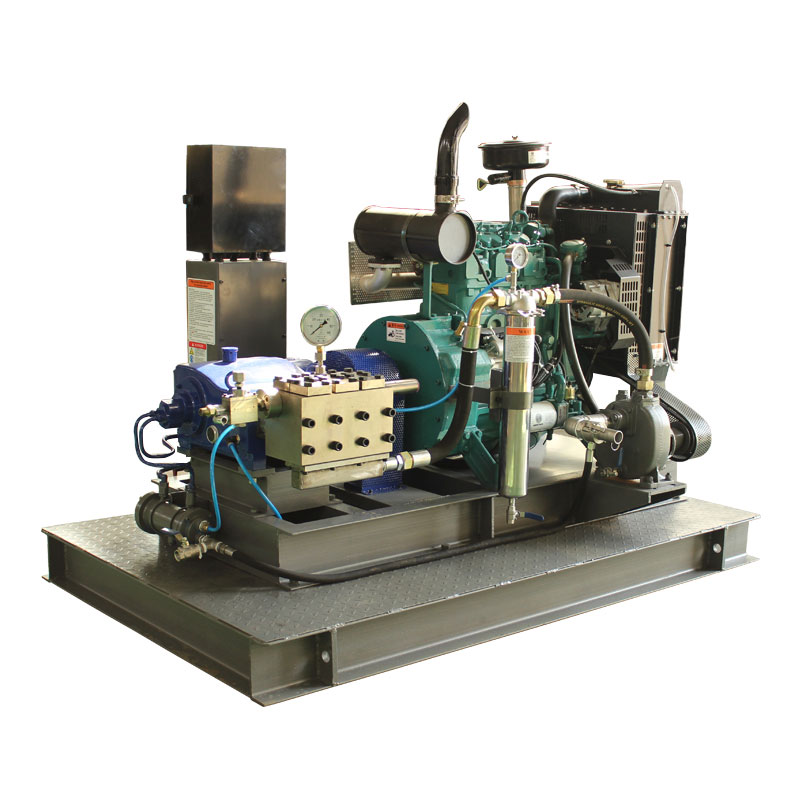
Hydro jetting is a pipe-cleaning method that uses pressurized water delivered through a specialized nozzle to remove blockages and buildup from the interior walls of drain and sewer lines. A high pressure machine drives water at pressures typically ranging from 1,500 PSI to 4,000 PSI for residential systems, and up to 5,000 PSI or higher for commercial or municipal applications.
The nozzle is threaded into the pipe through a cleanout access point and propelled forward by rear-facing jets while front-facing jets cut through obstructions ahead. The combined action simultaneously clears the path and flushes debris downstream toward the municipal sewer system.
Common Materials Hydro Jetting Removes
- Grease and cooking fat accumulation along pipe walls
- Tree root intrusions (smaller, fibrous roots)
- Mineral scale and hard water deposits
- Soap scum and biofilm layers
- Sand, silt, and debris from storm drain connections
- Toilet paper and soft organic matter clogs
The Advantages of Hydro Jetting Your Main Sewer Line
Understanding the hydro jetting pros and cons begins with its genuine strengths. When applied correctly, hydro jetting offers capabilities that no mechanical method can replicate.
Complete Pipe Wall Restoration
A drain snake creates a pathway through a clog but leaves behind the layers of grease, scale, and debris coating the pipe walls. Hydro jetting strips those walls down to near-original diameter. Independent plumbing studies have found that hydro jetted lines can maintain flow capacity significantly longer — often two to three times — before requiring retreatment compared to snaked lines.
No Chemical Drain Cleaners Required
Caustic chemical drain cleaners present risks to pipe integrity and local water systems. Hydro jetting relies exclusively on water pressure, making it the environmentally responsible choice for routine sewer line maintenance. No residue, no chemical runoff, no pipe corrosion from reactive agents.
Effective Across a Wide Range of Blockages
From grease accumulation in kitchen lines to fibrous root masses in older clay pipes, hydro jetting adapts via interchangeable nozzle configurations. Root-cutting nozzles, penetrating nozzles, and flat-surface nozzles allow technicians to match the tool to the specific obstruction type.
Long-Term Maintenance Efficiency
Commercial properties and municipalities schedule regular hydro jetting as part of preventive sewer maintenance — typically every 18 to 24 months for high-use lines — specifically because it resets the pipe to a clean baseline. This intervals-based approach has been shown to reduce emergency sewer backups by up to 60% in facilities that adopt it consistently.
No Excavation Required
The entire operation occurs through existing cleanout access points. No digging, no disruption to landscaping, no structural intrusion. For finished properties or urban settings where excavation is expensive and disruptive, this characteristic is significant.
Eliminates Bacterial Biofilm
Sewer pipes accumulate microbial biofilm on their walls over time. Hydro jetting physically removes these layers, which can reduce odor-causing bacterial activity within the line. This is particularly relevant for commercial food-service plumbing where odor management and health code compliance intersect.
The Real Disadvantages and Risks of Hydro Jetting
No technique is universally appropriate. The limitations of hydro jetting matter as much as its strengths — ignoring them leads to damaged pipes and wasted money.
| Risk Factor | Details | Who Is Most Affected |
|---|---|---|
| Pipe Damage in Deteriorated Lines | High-pressure water can fracture aged clay, cast iron with heavy corrosion, or pipes with existing cracks | Homes built before 1970 with original sewer lines |
| Not Effective Against Hard Blockages | Solid objects, hardened concrete, or collapsed pipe sections require mechanical removal first | Lines with debris intrusion or structural failure |
| Requires Camera Inspection First | Running high pressure into an unknown condition pipe is risky without prior assessment | All applications — camera inspection is non-negotiable |
| Higher Upfront Cost | Hydro jetting services cost 2 to 3 times more per session than standard drain snaking | Budget-conscious homeowners with infrequent clogs |
| Requires Professional Operation | Consumer-grade pressure washers lack the flow rate and nozzle systems for sewer jetting; improper use causes damage | DIY attempts without professional-grade equipment |
| Not a Structural Fix | Hydro jetting cleans pipes but cannot repair cracks, offset joints, or root re-intrusion once trees are nearby | Properties with aggressive tree root systems |
The Pipe Condition Caveat
This deserves particular emphasis: hydro jetting a sewer line in poor structural condition carries genuine risk of pipe failure. A pre-service camera inspection is not optional — it is the professional standard. Any technician who recommends jetting without first assessing pipe condition is cutting a corner that could cost the property owner thousands in emergency excavation and pipe replacement.
Pipes made from Orangeburg material — a fiber-based pipe used widely through the mid-20th century — are especially vulnerable. Even moderate pressure can collapse these pipes entirely. PVC and modern ABS pipes in good condition handle jetting pressures without concern.
Hydro Jetting vs Snaking: A Side-by-Side Comparison
The choice between these two methods is not simply about which is "better." Each has a defined role in sewer line maintenance. The right tool depends on the specific problem and the pipe's condition.
| Criteria | Hydro Jetting | Drain Snaking |
|---|---|---|
| Cleaning Depth | Full pipe wall surface | Clears path through blockage only |
| Effectiveness on Grease | Excellent — emulsifies and flushes | Low — does not remove wall buildup |
| Root Removal | Good for fibrous roots with root nozzle | Limited — cuts but does not extract |
| Typical Cost Range | $300 to $600+ residential | $100 to $250 residential |
| Safety on Old Pipes | Requires inspection; risky on damaged lines | Generally safer on fragile pipes |
| Preventive Value | High — resets pipe to clean baseline | Low — addresses acute clogs only |
| Time Required | 1 to 3 hours depending on line length | 30 to 60 minutes for most clogs |
| Equipment Needed | Specialized jetting unit, nozzle set, water supply | Electric or hand-operated drum machine |
A useful rule of thumb from field practice: snaking is the correct first response to an isolated, sudden blockage. Hydro jetting is the correct approach when the problem is recurring, when multiple drains are slow simultaneously, or when a line has not been maintained in several years.
Understanding Commercial Hydro Jetting Costs and Residential Pricing
Pricing for hydro jetting varies based on line length, pipe diameter, blockage severity, and regional labor rates. The following represents typical ranges based on industry data.
Standard main sewer line, up to 100 feet, single-family home
Apartment buildings, longer runs, heavier grease or scale accumulation
Restaurants, commercial kitchens, retail centers, municipal connections
What Drives the Price Up
- Camera inspection add-on: Typically $100 to $300 additional, but strongly recommended — some providers include it
- Severe root intrusion: Requires longer jetting cycles and specialized root-cutting nozzles
- Access difficulty: Lines without a proper cleanout require creating access, which adds labor
- Emergency or after-hours service: Weekend and overnight calls typically carry a 30% to 50% surcharge
- Commercial hydro jetting cost is higher due to larger-diameter pipes and higher required flow volumes
Cost vs. Long-Term Value
A single hydro jetting session at $400 that prevents a $6,000 sewer line excavation and repair represents exceptional value. When evaluated against the cost of repeated snaking visits — which may run $150 each, several times per year for chronic problems — the economics of hydro jetting often favor the higher upfront cost over a 3 to 5 year window.
When Hydro Jetting Is the Right Choice — and When It Is Not
- Multiple drains in the building are slow or backing up simultaneously
- A sewer line has not been serviced in more than 3 years
- Grease accumulation is confirmed as the primary cause of repeated blockages
- Camera inspection confirms the pipe walls are structurally intact
- You are preparing a property for sale and want documented proof of sewer health
- A commercial kitchen needs to meet health inspection standards
- Tree roots have been identified as a recurring issue in a confirmed-intact pipe
- Pipe material is Orangeburg, severely corroded cast iron, or unlined clay in poor condition
- Camera inspection reveals existing cracks, offset joints, or partial collapse
- The blockage is a single isolated incident with no history of recurrence
- A solid foreign object (toy, wipe, root ball) is the confirmed cause — mechanical removal should come first
- The line has recently been repaired with a liner that has not fully cured
- Budget constraints make the cost prohibitive relative to the severity of the issue
Drain Cleaning Safety: What Professionals Check Before Jetting
Responsible hydro jetting begins with a camera inspection — a non-negotiable standard that protects both the pipe and the service provider's liability. Here is the standard pre-jetting assessment protocol used by professional plumbing contractors.
Pressure Settings by Pipe Material
Professional technicians calibrate pressure to the specific pipe material being serviced. The following represents established field practice:
- PVC pipe: 1,500 to 3,000 PSI — handles higher pressure well without concern in good condition
- Cast iron (sound): 2,000 to 3,500 PSI — dense material tolerates jetting when free of heavy corrosion
- Clay tile (intact): 1,200 to 2,000 PSI — lower end of range; inspect carefully for joint integrity
- ABS plastic: 1,500 to 2,500 PSI — common in residential applications, generally tolerates standard jetting
- Orangeburg / deteriorated pipe: Not recommended — any pressure risks collapse
Hydro Jetting in Action: Field Application
The image below illustrates a typical professional hydro jetting setup at a residential main sewer cleanout access. The high pressure machine connects to an external water source, feeds through reinforced hose, and delivers controlled pressure through a directional nozzle inserted into the pipe.
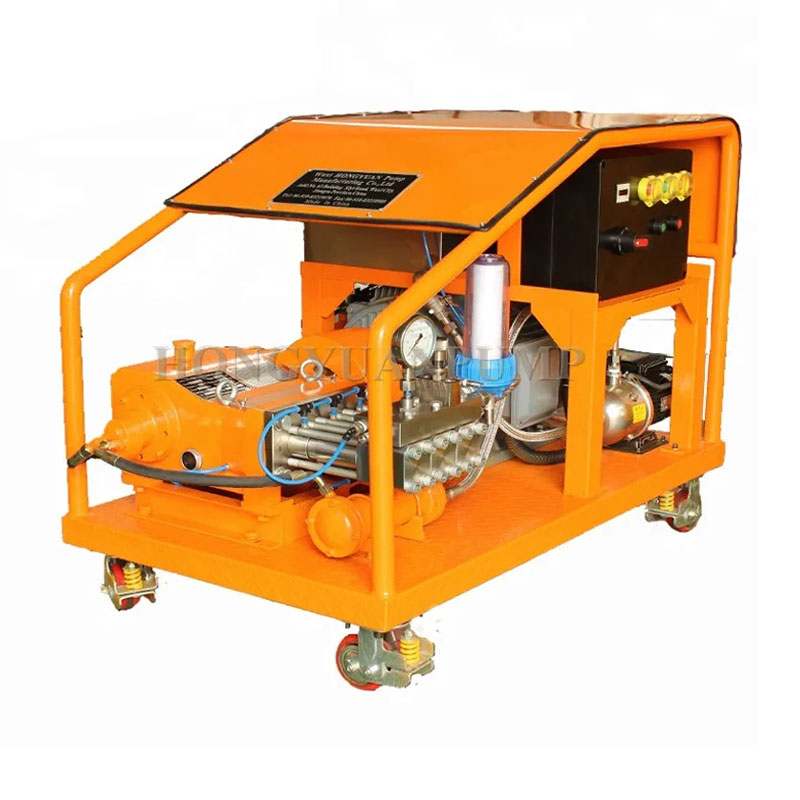
Modern units designed for main sewer line hydro jetting integrate variable pressure controls, allowing technicians to start at lower settings and increase gradually as conditions warrant — a practice that protects pipe integrity while maximizing cleaning effectiveness.
Sewer Line Maintenance: Building a Long-Term Strategy
Hydro jetting is most effective as one component of a broader sewer maintenance approach rather than a reactive emergency measure. The following schedule represents professional recommendations for different property types.
| Property Type | Recommended Interval | Primary Concern | Complementary Service |
|---|---|---|---|
| Single-Family Home (no tree roots) | Every 3 to 5 years | Grease and scale accumulation | Camera inspection with service |
| Single-Family Home (tree roots present) | Every 12 to 18 months | Root re-intrusion | Root barrier treatment after jetting |
| Multi-Unit Residential | Annually | High volume grease and soap | Interceptor cleaning if applicable |
| Restaurant or Commercial Kitchen | Every 3 to 6 months | Heavy grease accumulation | Grease trap maintenance |
| Retail or Office Building | Every 2 to 3 years | Soap, debris, light grease | Periodic camera inspection |
Signs That a Main Sewer Line Needs Attention Now
- Multiple fixtures draining slowly at the same time
- Gurgling sounds from toilets when sinks drain nearby
- Sewage odor inside the home with no visible source
- Sewage backup in the lowest fixture in the building (typically a basement drain or ground-floor toilet)
- Unusually lush or green patches of lawn above the sewer line path
- Repeated need to snake the same drain within a 6-month period
Frequently Asked Questions
Q1: What is hydro jetting a sewer line and how does it differ from regular drain cleaning?
Hydro jetting a sewer line is a professional pipe-cleaning process that uses high-velocity water pressure — typically between 1,500 and 4,000 PSI — delivered through a specialized nozzle to scour pipe walls and clear blockages. Unlike standard drain snaking, which punches a hole through a clog without removing wall buildup, hydro jetting restores the pipe to near-original internal diameter by removing grease, scale, root matter, and biofilm from the entire pipe wall surface.
Q2: Can hydro jetting damage my pipes?
Yes, it can — under specific conditions. Pipes in poor structural condition, made from Orangeburg material, or with pre-existing cracks are genuinely at risk from high-pressure water. This is precisely why a camera inspection before any jetting service is considered non-negotiable professional practice. Pipes in sound condition — PVC, ABS, intact cast iron, and good-condition clay — tolerate hydro jetting safely when appropriate pressure settings are used.
Q3: How long does hydro jetting a main sewer line typically take?
For a standard residential main sewer line of 50 to 100 feet in moderate condition, expect 1 to 2 hours of total service time, including setup, jetting, and cleanup. Severe blockages, longer runs, heavy root intrusion, or the addition of a camera inspection can extend this to 3 hours or more. Commercial lines with greater diameter and length may require half a day of service.
Q4: Is hydro jetting worth the cost compared to snaking?
For recurring drain problems, grease-heavy lines, or lines that have never been professionally maintained, hydro jetting generally delivers better long-term value despite its higher upfront cost. For an isolated, one-time blockage with no history of recurrence, snaking is likely adequate and more cost-effective. The real savings from hydro jetting come from extended intervals between service calls and a measurably reduced risk of emergency sewer backups.
Q5: Do I need a camera inspection before hydro jetting?
Yes — a pre-service camera inspection is the professional standard and should be considered mandatory, not optional. It identifies pipe material, existing structural damage, the nature and location of blockages, and any conditions that would make jetting unsafe or ineffective. Operating a high-pressure water system inside a pipe of unknown condition creates real risk of costly structural damage that a brief camera inspection can prevent entirely.
Q6: Can hydro jetting remove tree roots from a sewer line?
Hydro jetting with a root-cutting nozzle can effectively remove fibrous and younger root intrusions from intact sewer pipes. However, it does not kill the root system or prevent regrowth — roots will return as long as the tree is alive and the pipe joint is accessible to them. After jetting roots from a line, many professionals recommend a post-service root inhibitor treatment and increased inspection frequency to monitor regrowth before it becomes a full blockage again.
Q7: Is hydro jetting safe for all types of sewer pipes?
No. Hydro jetting is appropriate for PVC, ABS, sound cast iron, and structurally intact clay tile pipe. It is not appropriate for Orangeburg pipe, severely corroded pipe, pipes with confirmed cracks or offset joints, or any line where a camera inspection reveals structural compromise. The pipe material and current condition — not simply the type of clog — determine whether jetting is the appropriate choice.